


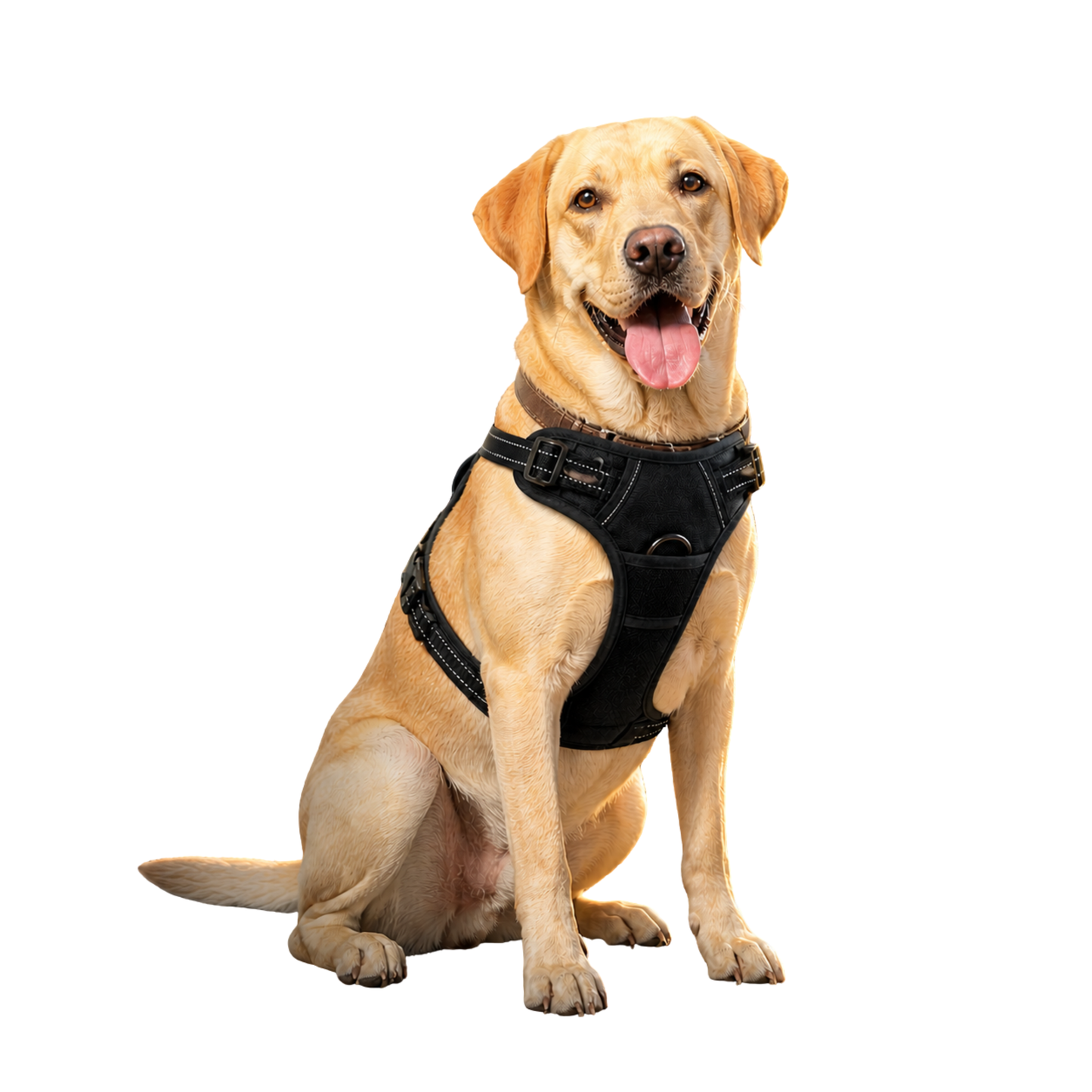
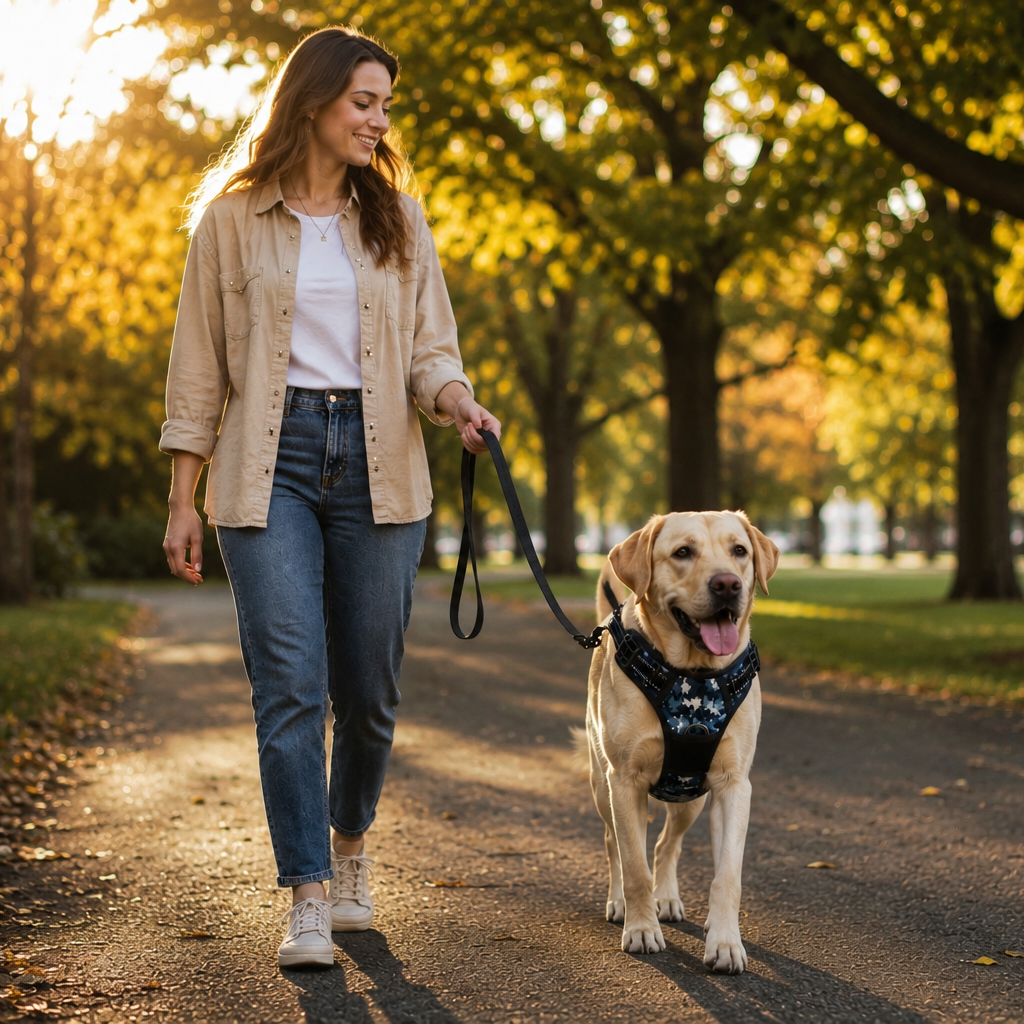
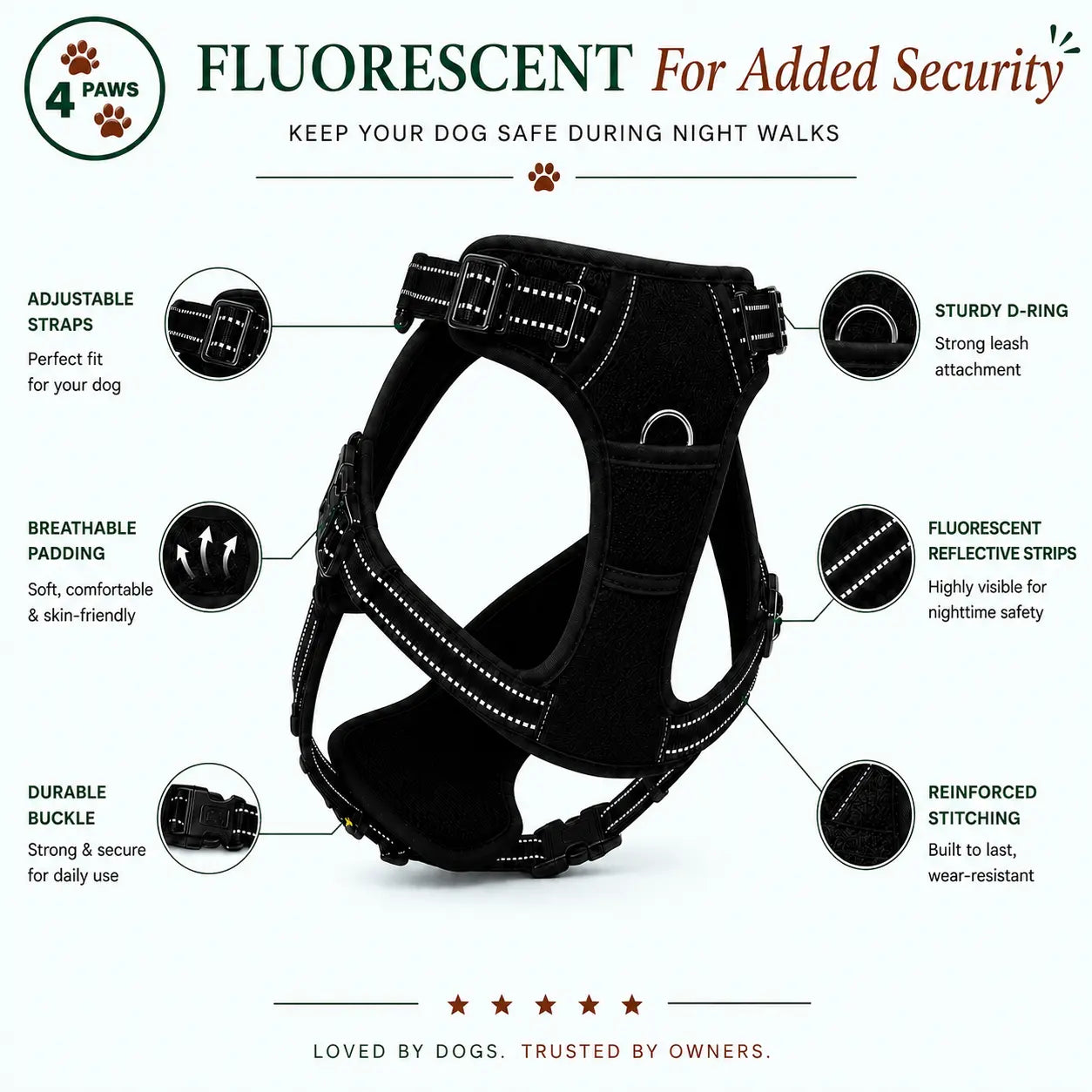
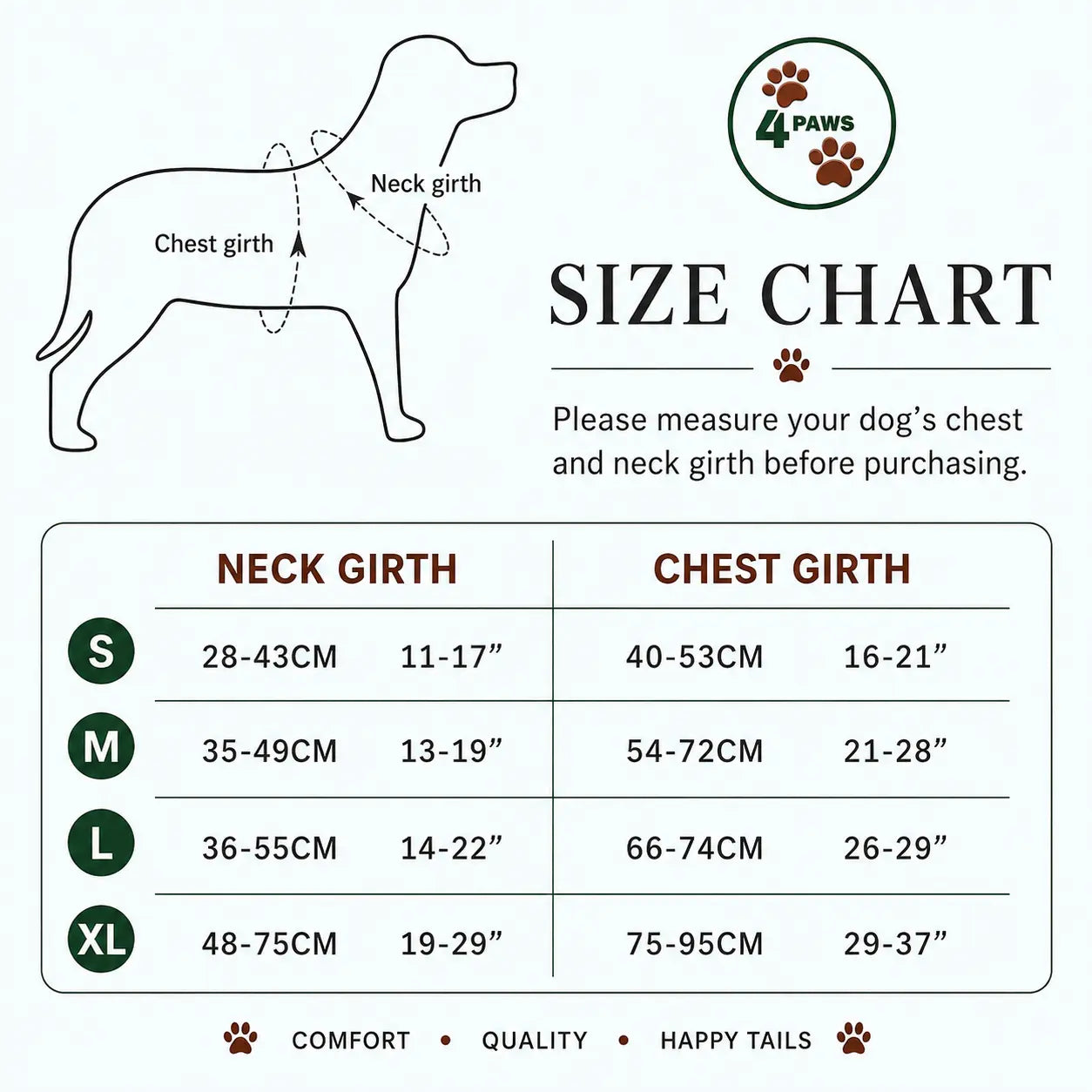
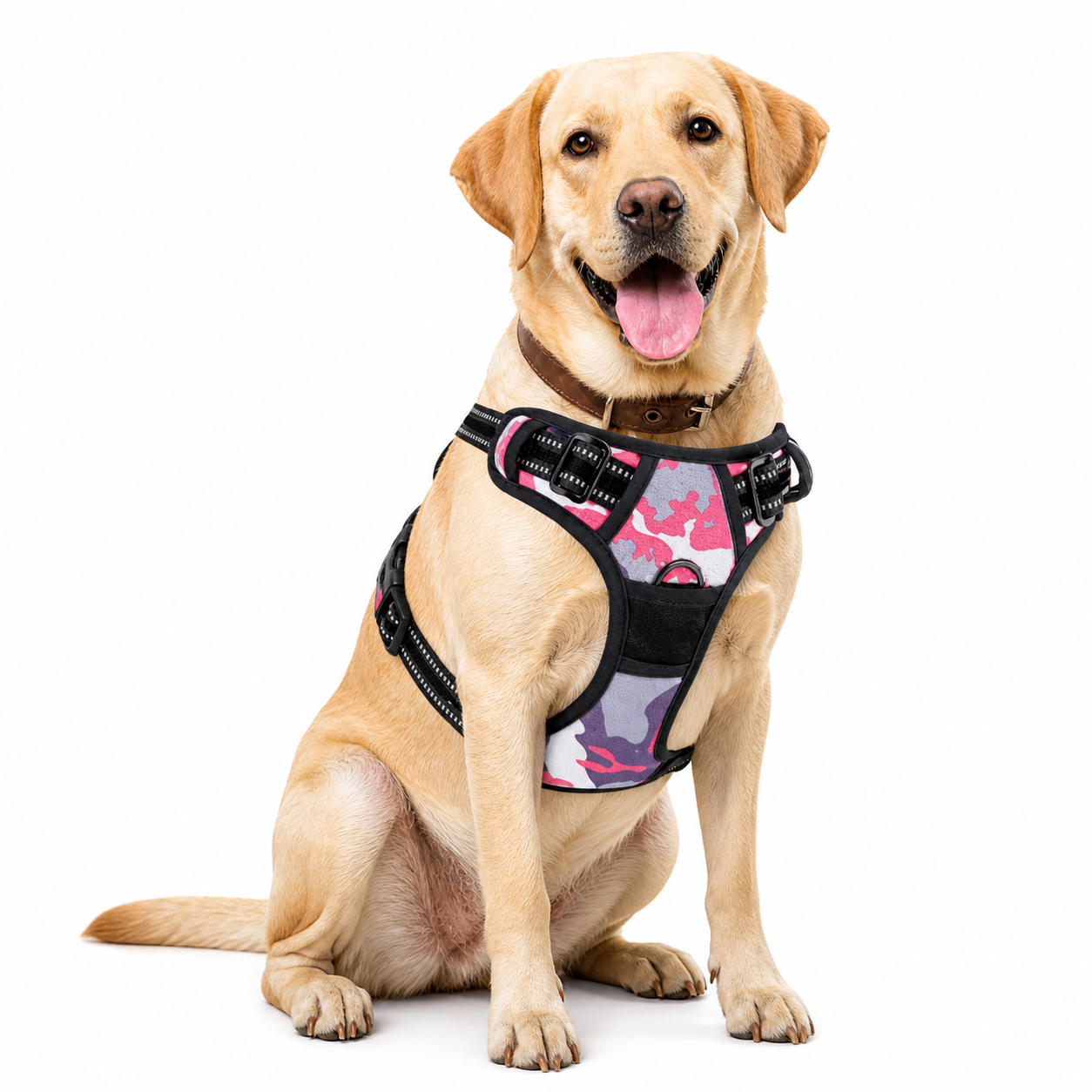
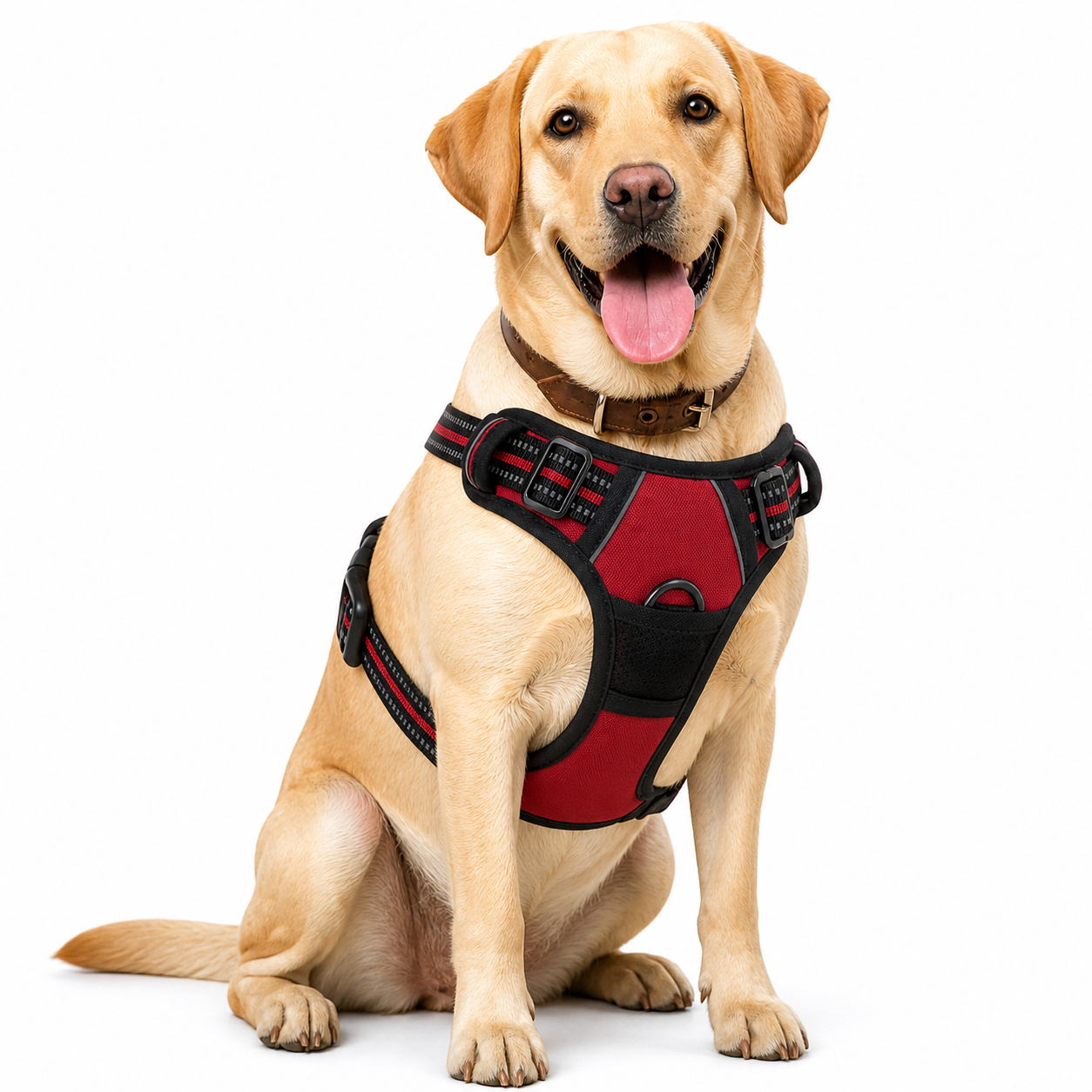
Collar vs. Four Paws
The difference you can feel on the leash
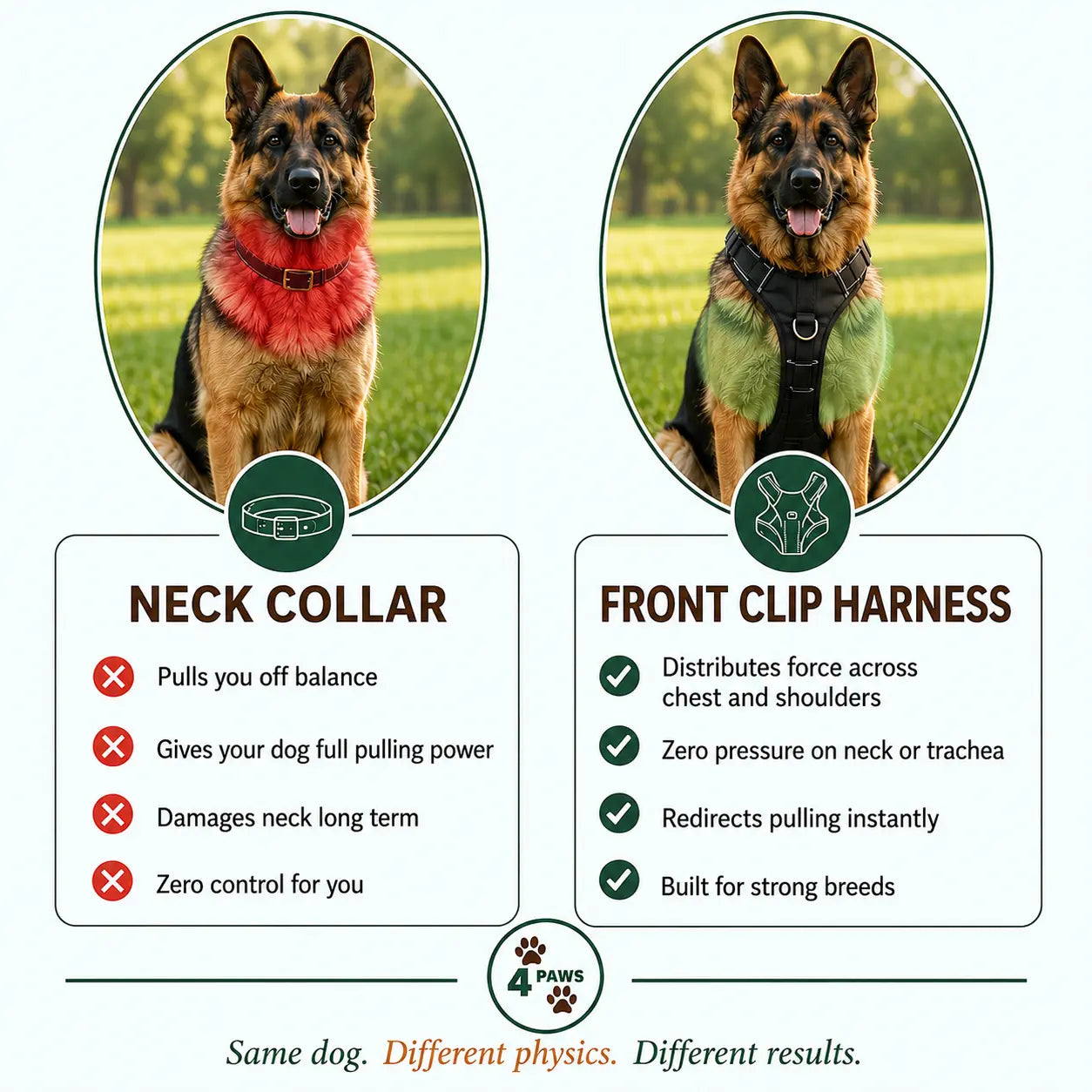
Same walk, same dog, two completely different loads on the body.
Zero risk
Walk better in 30 days, or your money back.
Try the kit on real walks for a full month. If your dog isn't calmer on the leash and easier to walk, email us and we'll refund every cent, and you keep the training guide. The risk is entirely ours.
Start walking better →The science, not the sales pitch
We didn't invent the problem. We read the research.
Independent, peer-reviewed studies on what collars do to a pulling dog, and why a harness changes it.
Veterinary Record
Author, Year
A short, real finding from the study.
Veterinary Record
Author, Year
A short, real finding from the study.
Veterinary Record
Author, Year
A short, real finding from the study.
You know this walk
It's not your dog. It's the equipment.

The dragging
A strong dog leaning into a collar uses their full bodyweight against your arm.
The looks
Hauled down the street while neighbours watch. Walks stop being fun.
The sore shoulder
Wrist, elbow, shoulder, back. Every lunge travels straight into your joints.
Meanwhile, under the collar
Your dog pays a price you never see.
Pressure in the eyes
Collar pulling raises the pressure inside a dog’s eyes. A harness does not. (Pauli 2006)
Injury-level neck force
Every collar type exceeds the neck-injury threshold when a dog pulls. (Carter 2020)
A harness has no downside
Studies show harnesses do not increase pulling or stress. (Grainger 2016)
A chest harness moves 100% of that force to the strongest part of their body.
Read the ResearchWhy This Stops the Pulling
Two clips, one piece of physics. That is the whole trick.
Front Clip = Steering
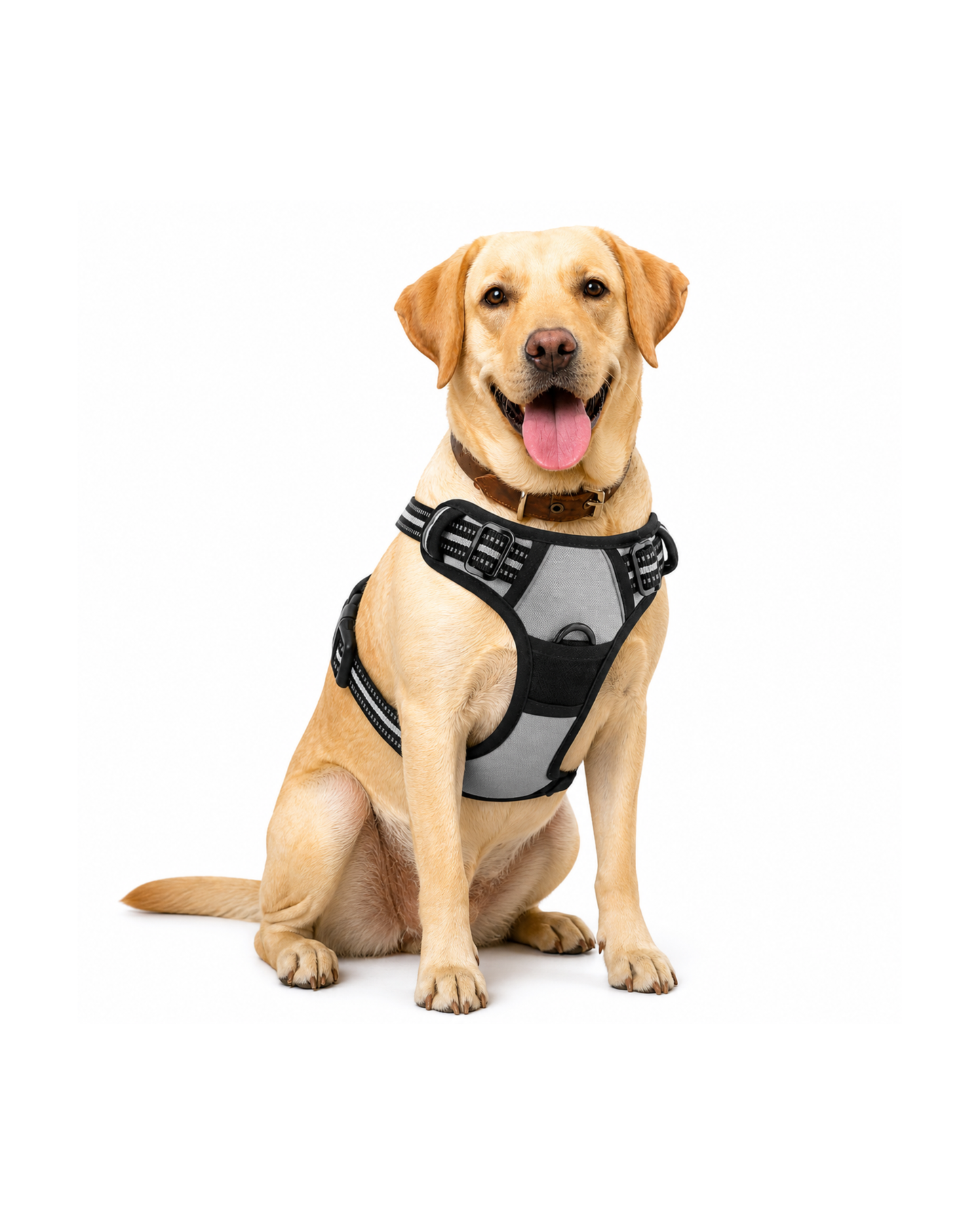
The leash attaches at the chest. The moment your dog lunges, their own momentum turns them back toward you instead of forward. No jerking, no correction. They simply lose the ability to drag.
Back Clip = Cruise Mode
A second D-ring sits on top of the harness for relaxed walks, car rides and trained dogs. Switch clips in one second depending on the walk.
No Leverage = Less Pulling
On a collar a dog leans in and their whole bodyweight works against you. On a front clip, pulling costs them their balance. Most dogs stop trying within the first walks. Not because it hurts, because it stops working.